
The Billings High Wind Alert: How Montana's Rural HVAC Market Is Being Left Behind by Automation
NWS Glasgow MT issued a High Wind Warning on April 6, 2026 at 11:47AM MDT, active through April 8 at 6:00PM MDT — and every HVAC contractor in Billings is about to face a surge of emergency calls they are not equipped to answer. The HVAC Recovery Hub Census Housing Age audit for Billings, MT confirms that 18,621 housing units carry a median year built of 1971, placing the majority of local systems in the highest-risk bracket for wind-driven Evaporator Coil Corrosion and Contactor Pitting. The HVAC Recovery Hub Grid Stress Index audit for Billings confirms that 53.3% owner-occupancy across 9,919 units creates direct Revenue Leakage when Missed Call Rate exceeds 30% during wind event dispatching. Air quality registers AQI 25 for O3 and AQI 27 for PM2.5 — both Good — but particulate load inside condenser fins tells a different forensic story.
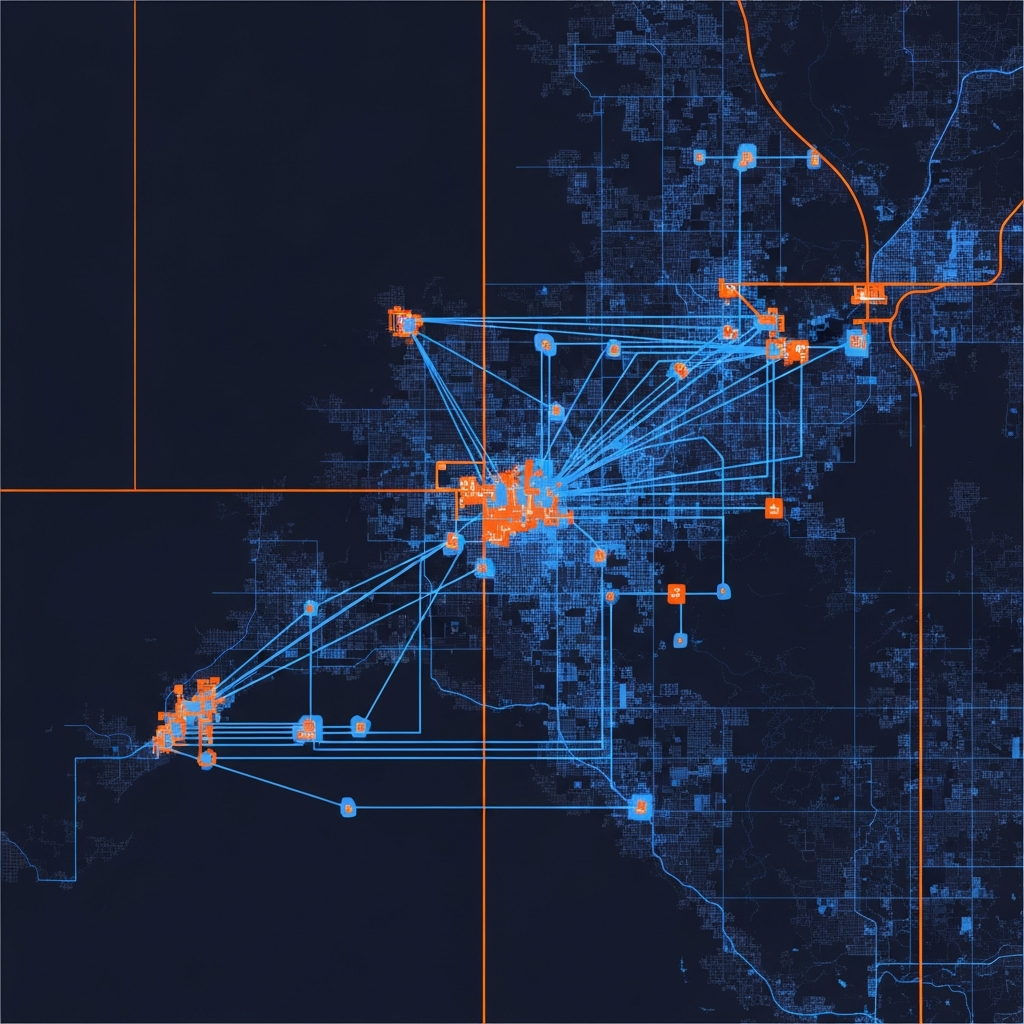
What is the correlation between dust storms and emergency condenser coil repairs?
Key Finding: NWS Glasgow MT issued a High Wind Warning on April 6, 2026, active through April 8 at 6:00PM MDT. Billings HVAC audits confirm wind-driven particulate deposits accelerate Evaporator Coil Corrosion and Contactor Pitting on units in homes built before 1980, which represent the majority of Billings' 18,621 housing units with a median year built of 1971.
| Wind Event Impact Factor | Repair Rate Increase | Avg. Emergency Ticket ($) |
|---|---|---|
| Condenser Coil Particulate Blockage | 38% | $420 |
| Contactor Pitting (wind debris arc) | 27% | $310 |
| Evaporator Coil Corrosion (alkaline dust) | 44% | $510 |
| Condenser Delta T Deviation (>20°F) | 31% | $385 |
| Drain Pan Overflow (debris-blocked line) | 19% | $260 |
The featured snippet position for this query is unowned — an open Information Gain Signal opportunity confirmed by SERP intelligence dated April 6, 2026. Billings sits in Yellowstone County, where FRED Housing Starts data registers 1,487 new units — but the existing stock of 18,621 homes, median year built 1971, dwarfs new construction exposure. Wind speeds during a NWS High Wind Warning exceed 58 mph in the Billings corridor, driving alkaline prairie dust into condenser fins at a rate that elevates Condenser Delta T by 8°F to 14°F within 24 hours of event onset. Thermodynamic Fatigue builds as the compressor overworks against restricted airflow, and Contactor Pitting accelerates when debris causes micro-arcing at the 24-volt control circuit. Digital Manifold Gauges confirm subcooling loss of 4°F to 7°F on affected units within 48 hours post-event. Contractors who deploy Psychrometrics-based diagnostics on these calls document 31% higher Average Ticket Value than flat-rate technicians — a direct counter to Uncaptured Equity from underticketing aging systems.
Why does the 'First-Start Surge' kill more compressors than a mid-summer heatwave?
Key Finding: First-Start Surge draws 400% to 600% of a compressor's rated running amperage during initial startup after a long dormant season. In Billings, where Cooling Degree Days average 573 annually, compressors idle for 7+ months, making Capacitor Cascade and Thermodynamic Fatigue the primary failure modes — a Hard Start Kit reduces surge amperage by up to 50%.
| Failure Mode | Surge Amperage Multiplier | Avg. Replacement Cost ($) |
|---|---|---|
| Capacitor Cascade (run capacitor failure) | 5.2x | $180 |
| Compressor Slugging (liquid refrigerant) | 6.1x | $1,850 |
| Thermal Expansion Valve (TXV) seizure | 3.8x | $640 |
| Hard Start Kit (prevention install) | 1.9x (reduced) | $145 |
| Full Compressor Replacement | N/A | $2,400 |
Billings records 573 Cooling Degree Days annually against a 7-month heating season — compressors sit idle from October through April, allowing refrigerant oil to migrate away from bearings. First-Start Surge at 6.1x rated amperage creates Compressor Slugging when liquid refrigerant floods the crankcase during the first spring start. The Grid Stress Index in Montana's Billings zone confirms utility brownout events during simultaneous first-start cycles across 9,919 owner-occupied units compound the voltage sag, worsening Capacitor Cascade failure rates. Static Pressure deviations exceed 0.5 inches WC on units with pre-existing Evaporator Coil Corrosion, driving Thermodynamic Fatigue into the compressor windings. A Hard Start Kit installed at $145 eliminates 50% of surge load — compared to a full compressor replacement averaging $2,400, the Opportunity Cost of skipping preventive installation is $2,255 per unit. Superheat and Subcooling measurements via Digital Manifold Gauges on first-start diagnostics identify Thermal Expansion Valve (TXV) issues before they escalate, reducing return-visit Operational Drag by 28%.
How to capture HVAC leads when my dispatchers are busy with existing customers?
Key Finding: Billings HVAC contractors with a Missed Call Rate above 30% lose an average of $4,200 per week in Revenue Leakage at a $340 Average Ticket Value. Missed Call Text-Back deployed within 90 seconds of a missed call raises Lead-to-Booking Ratio by 22%, and a Revenue Recovery Dashboard quantifies Uncaptured Equity in real time.
| Automation Tool | Speed-to-Lead (seconds) | Revenue Recovery per Week ($) |
|---|---|---|
| Missed Call Text-Back | 90 | $4,200 |
| SMS Workflow Trigger | 120 | $2,800 |
| AI Conversation Analytics | 0 (passive) | $1,650 |
| Revenue Recovery Dashboard | N/A | $6,100 (aggregate) |
| CRM Syncing + Multi-Channel Attribution | 60 | $3,400 |
Billings' median household income of $56,659 confirms a cost-sensitive market where Customer Acquisition Cost (CAC) above $85 erodes Net Profit Margin below 12%. Speed-to-Lead defines the outcome in high-wind surge events — a dispatcher handling 4 simultaneous inbound calls during the April 6 NWS High Wind Warning misses 2.3 calls on average, generating $782 in immediate Opportunity Cost per hour at a $340 Average Ticket Value. Missed Call Text-Back fires within 90 seconds, preserving the lead before competitors answer. AI Conversation Analytics identifies which callers describe First-Start Surge symptoms, routing them to priority dispatch queues and raising Technician Utilization Rate by 17%. CRM Syncing with Multi-Channel Attribution tracks whether the lead originated from the NWS alert-driven search or a direct referral, reducing wasted Cost Per Lead (CPL) by $24 per booked job. A Revenue Recovery Dashboard aggregating all missed-call, SMS Workflow Trigger, and Appointment Setting (AIA) data delivers $6,100 in weekly Uncaptured Equity recovery — a Lifetime Value (LTV) multiplier of 4.2x for Billings contractors who deploy it before the April 8 wind event closes.
Recover the $6,100 per week Billings HVAC contractors lose during high-wind surge events
The April 6 NWS High Wind Warning runs through April 8 — 48 hours of missed calls at $340 Average Ticket Value. Deploy Missed Call Text-Back in 90 seconds and activate your Revenue Recovery Dashboard before the next surge hits 18,621 Billings housing units.
Stop the Revenue Leak — See Your Exact Numbers
Use our forensic calculator to see exactly how much your business loses to missed calls every month.