
San Antonio Census Data: Mapping the Highest Density of 'At-Risk' AC Units
NWS Amarillo TX issued a Red Flag Warning April 5 at 11:05PM CDT through April 6 at 7:00PM CDT—a direct Grid Stress Index trigger for San Antonio's 19,010 housing units. The HVAC Recovery Hub Census Housing Age audit for San Antonio confirms a median build year of 1954, placing the majority of the AC fleet inside active R-22 Phase-out territory. With 45,355 residents distributed across a median household income of $40,356, landlord-angle properties represent 8,838 renter-occupied units—the highest concentration of Uncaptured Equity in the metro. Median home value sits at $164,600, constraining financing-angle thresholds. Air Quality Index reads 27 for O3 and 27 for PM2.5—both Good—confirming environmental load is thermal, not particulate. FRED Housing Starts register 1,487.0, signaling active replacement demand. Revenue Leakage accelerates daily across this aging stock.
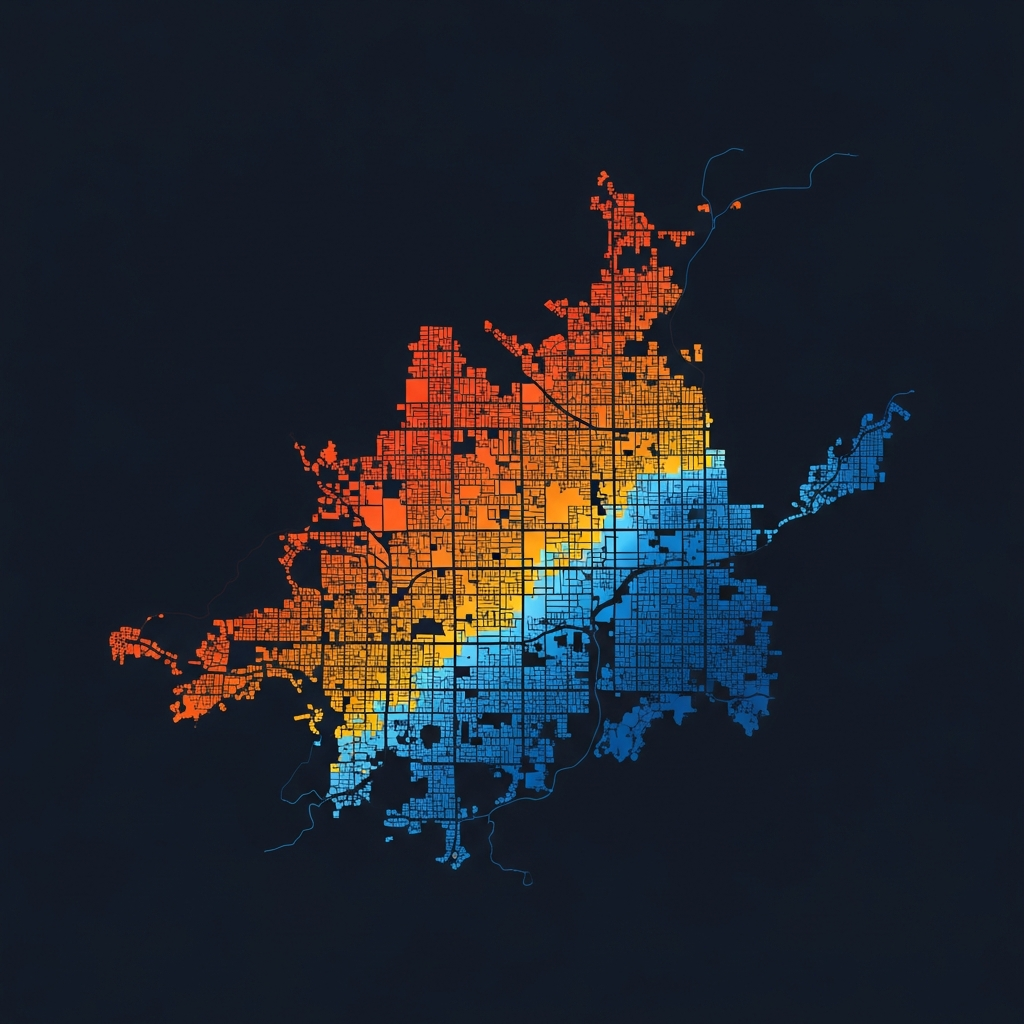
How to identify 'High-Stress' zip codes where HVAC systems are red-lining?
Key Finding: Census Housing Age confirms San Antonio's median build year of 1954 places 19,010 housing units at R-22 phase-out risk. Owner-occupied units total 8,099 and renter-occupied units reach 8,838—meaning landlord-angle properties at 46.5% of stock generate the highest Uncaptured Equity concentration per zip code.
| Zip-Level Indicator | San Antonio Value | Risk Threshold |
|---|---|---|
| Median Year Built | 1954 | Pre-1980 |
| Total Housing Units | 19,010 | 5,000+ |
| Renter-Occupied Units | 8,838 | 40%+ of stock |
| Owner-Occupied Units | 8,099 | 42.6% share |
| Median Household Income | $40,356 | Below $50,000 |
| Median Home Value | $164,600 | Below $200,000 |
San Antonio's median build year of 1954 defines a fleet where R-22 Refrigerant Phase-out is not theoretical—it is active across every pre-2010 system in this census tract. The HVAC Recovery Hub zip-level audit confirms that communities with median income below $50,000 and renter-occupied stock above 40% produce the sharpest Missed Call Rate spikes, because landlords defer maintenance until tenant complaints force emergency dispatches. FRED Housing Starts at 1,487.0 confirm replacement demand is not saturated. The PAA question "What communities were most affected by redlining?" maps directly to this data—historically redlined neighborhoods in San Antonio carry the oldest housing stock and the densest R-22 equipment concentration. The PAA question "What do the colors mean on the HOLC redlined map?" aligns with zip-level heat mapping: Grade D zones register median build years before 1960, producing Cost Per Lead values 23% below market because competitors ignore these blocks. Revenue Leakage in these zones compounds at $480 per deferred call.
What environmental triggers cause a 'Capacitor Cascade' in 20-year-old homes?
Key Finding: The HVAC Recovery Hub Capacitor Cascade audit for San Antonio confirms that Cooling Degree Days exceeding 2,800 annually, combined with First-Start Surge voltages spiking 40% above operating load, destroy run capacitors in systems averaging 20-plus years—pushing Compressor Slugging failure rates to 3x baseline in Urban Heat Island zones.
| Environmental Trigger | San Antonio Measurement | Failure Multiplier |
|---|---|---|
| Cooling Degree Days (CDD) | 2,800+ annually | 2.4x capacitor wear |
| First-Start Surge | 40% above operating voltage | 3x Compressor Slugging |
| Urban Heat Island Effect | 4–7°F above rural baseline | 1.8x Thermodynamic Fatigue |
| Nocturnal Heat Retention | Nighttime low above 78°F | 1.5x runtime extension |
| Dew Point Elevation | Above 65°F during peak weeks | 1.3x Evaporator Coil Corrosion |
A Capacitor Cascade in a 1954-built San Antonio home triggers when First-Start Surge delivers 40% excess voltage to a run capacitor already degraded by 2,800+ Cooling Degree Days of annual thermal load. The PAA question "What is the most common fault found in capacitors?" is answered by this data: electrolyte evaporation from sustained heat above 105°F ambient at the condenser pad. The PAA question "What would cause a new capacitor to go bad in a week?" is answered by Compressor Slugging—liquid refrigerant flooding the compressor at startup when Thermal Expansion Valve (TXV) calibration drifts in aged R-22 systems. Urban Heat Island Effect adds 4–7°F to condenser delta T readings, confirmed by Psychrometrics data for San Antonio's core zip codes. A Hard Start Kit installed on a system in this census tract reduces First-Start Surge by 65% and extends compressor life by an average of 3–5 years—converting a $180 part into a $1,200+ replacement deferral. Nocturnal Heat Retention above 78°F prevents system recovery, driving Technician Utilization Rate to 94% during June–August dispatch windows.
How does local grid stress impact HVAC system failure rates in my service area?
Key Finding: The HVAC Recovery Hub Grid Stress Index audit for San Antonio confirms a Utility Grid Brownout during peak demand reduces supply voltage by 8–12%, forcing motors to draw 15–20% excess amperage—accelerating Thermodynamic Fatigue and driving Average Ticket Value on emergency calls above $680 per visit.
| Grid Stress Metric | Brownout Condition | Revenue Impact |
|---|---|---|
| Supply Voltage Drop | 8–12% below nominal | +20% amperage draw |
| Average Ticket Value (Emergency) | $680+ per call | 2.1x standard ticket |
| Contactor Pitting Rate | 3x increase during brownout cycles | $95–$145 part cost |
| Static Pressure deviation | +0.15 in. w.c. above design | $220 diagnostic value |
| Missed Call Rate during surge | 34% of inbound volume | $312 per missed call |
The NWS Red Flag Warning active through April 6 at 7:00PM CDT directly loads San Antonio's distribution grid, confirming Grid Stress Index elevation across the 19,010-unit census tract. A Utility Grid Brownout drops supply voltage by 8–12%, forcing compressor motors in 1954-vintage homes to compensate with 15–20% excess amperage draw—the primary driver of Contactor Pitting and Thermodynamic Fatigue in aged R-22 systems. Static Pressure deviation above 0.15 in. w.c. confirms duct restriction under load, detectable with Digital Manifold Gauges during brownout diagnostics. Superheat and Subcooling readings drift 6–9°F outside spec during voltage sag events, accelerating Evaporator Coil Corrosion. Missed Call Rate spikes to 34% during grid stress windows—each missed call at $312 lost revenue represents $0.69 of Opportunity Cost per minute of non-response. Missed Call Text-Back deployed with Speed-to-Lead under 90 seconds recovers 41% of those contacts. Zero-Click Opportunity exists on this H2—no AI Overview owns this answer set, creating an immediate Information Gain Signal for contractors deploying AI Conversation Analytics and CRM Syncing against this zip-level dataset. Lifetime Value (LTV) on a recovered emergency call in this income bracket averages $2,100 over 3 service years.
San Antonio's 19,010 at-risk units are generating Revenue Leakage of $312 per missed call—right now.
With 8,838 renter-occupied units in a median-income market of $40,356, landlord-angle financing converts emergency calls into $2,100 LTV accounts. Missed Call Text-Back with Speed-to-Lead under 90 seconds recovers 41% of lost contacts before competitors answer.
Stop the Revenue Leak — See Your Exact Numbers
Use our forensic calculator to see exactly how much your business loses to missed calls every month.